
Most businesses asking this question are really asking a more practical one: where should the next dollar and the next hour go?
The answer depends on what people are searching for, where they are searching, and what Google chooses to show. For a local service business, that difference is massive. A person searching for “roof repair near me” is not behaving like someone searching for “how long does a roof last.” One wants a nearby company now. The other is still gathering information.
That is why local SEO and organic SEO should not be treated as interchangeable. They overlap, but they serve different search intent, different result types, and different stages of the buying process.
Local SEO vs organic SEO: the core difference
Local SEO focuses on visibility in Google Maps, the local pack, and place-based searches. Organic SEO focuses on visibility in the standard web results across informational, commercial, and transactional queries.
When a search has local intent, Google often shifts the playing field. Instead of ranking only web pages, it also ranks businesses. That means your Google Business Profile, reviews, proximity, and local prominence start carrying real weight. When a search is broader, Google relies more heavily on page-level relevance, usability, source expertise, and link signals across the web.
A simple way to think about it is this:
- Local SEO = winning nearby demand
- Organic SEO = winning broader search visibility
- Local SEO = business-level visibility
- Organic SEO = page-level visibility
For many small to mid-sized companies, especially service-area businesses, local SEO is usually the bigger lever for lead generation. Organic SEO still matters a great deal, though it often works best as the system that supports, expands, and reinforces local visibility.
Google ranking signals for local SEO and organic SEO
Google has been fairly clear that local rankings and organic rankings are not built the same way.
According to Google Business Profile Help, local results are driven mainly by relevance, distance, and prominence. That framework is far more direct than general organic ranking systems, which look at a wider mix of signals.
Here is what those local factors mean in practice:
- Relevance: how closely your business profile and local pages match the search
- Distance: how close your business is to the searcher or the location named in the query
- Prominence: how well known and well regarded the business appears online, including reviews and references
Google also says there is no way to request or pay for a better local ranking. That matters because it keeps the focus where it belongs: accurate business data, strong local pages, trustworthy signals, and a great customer experience that leads to real reviews.
Organic SEO is broader. Google Search Help says ranking systems consider query words, page relevance, usability, expertise of sources, and location or settings. Google Search Central adds that ranking systems work at the page level across hundreds of billions of pages and other content, with link analysis systems, including PageRank, still part of the core mix.
That difference changes the work itself. Local SEO is often about making your business unmistakably relevant to a city or service area. Organic SEO is often about making each page the best fit for a given search intent.
Why local SEO often matters more for service businesses
If you serve a defined metro area, local SEO usually deserves the first priority.
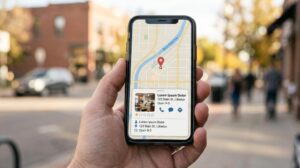
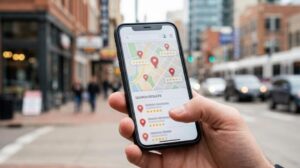
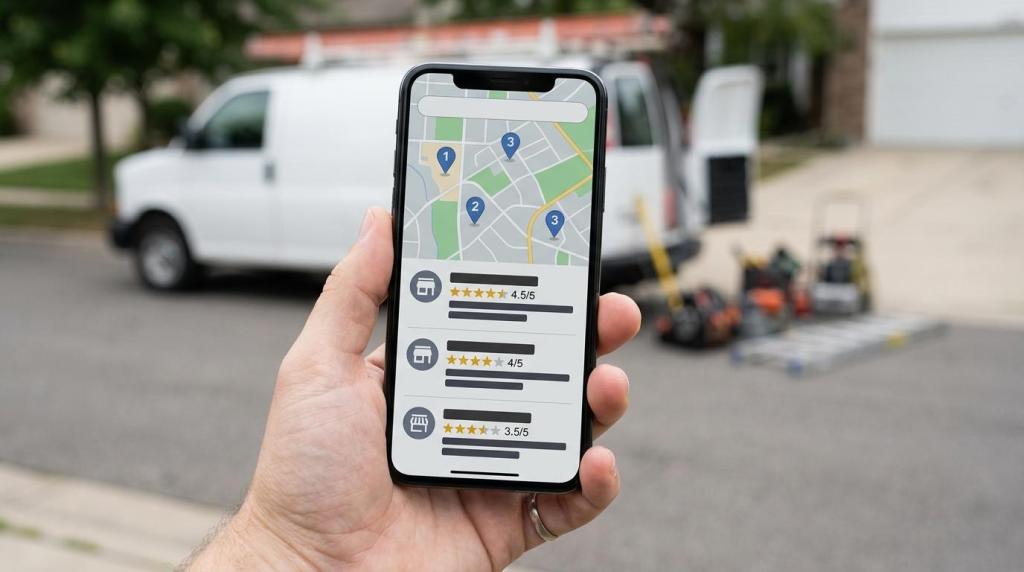
A person searching for “plumber in Denver” or “HVAC repair near me” is likely to see a map pack before standard web listings. On mobile, that local pack can take over much of the screen. It includes reviews, directions, calls, business hours, and quick trust signals before a user even reaches your website.
That is a big reason local SEO can drive leads faster than broader organic work. Google is actively sorting local options based on proximity and prominence, not just on whose website has the strongest blog post or deepest backlink profile.
Firestarter SEO case studies reflect this pattern. In one campaign for Checkmate Moving & Storage, local SEO work generated 297 net-new leads over 26 months, alongside a 156% increase in organic traffic and 64 new ranking keywords. In another campaign for a Denver-area HVAC company, organic search produced 14 key events from 583 sessions, a 2.4% conversion rate, while paid search generated 3 key events from 472 sessions, a 0.6% conversion rate during the same period.
Those results do not mean local SEO always beats every other channel. They do show why local search is often the shortest path from visibility to inquiry for businesses tied to geography.
A strong local presence usually includes a few core assets working together.
- Google Business Profile
- Local landing pages
- Reviews and ratings
- Consistent business citations
- Service-area relevance
When organic SEO matters more than local SEO
Organic SEO becomes the bigger priority when searches are less tied to place and more tied to topic, category, or research.
A buyer looking up “cost to replace furnace,” “best moving checklist,” or “commercial roofing maintenance plan” may not be ready to call anyone yet. That person is gathering context, comparing options, and building trust. Standard organic rankings are where your content earns that attention.
Organic SEO also matters more when your market is broader than one city. A regional company serving several states, a national B2B firm, or an ecommerce brand needs visibility that goes beyond proximity. In those cases, page-level optimization, content depth, internal linking, technical health, and authority signals become central.
There is another reason organic SEO cannot be ignored: people cross-check. BrightLocal reported from a representative panel of 1,227 US consumers that three quarters used multiple channels in their most recent search for a local business. Google still dominates local-business discovery, but it is rarely the only touchpoint. Someone may find a company in Maps, then read service pages, compare pricing pages, scan reviews, and look at third-party listings before making contact.
That means organic SEO often acts as validation. Local SEO gets you seen. Organic SEO helps prove you are the right choice.
Local SEO and organic SEO side by side
The best way to choose priorities is to compare the two systems in practical terms.
| Category | Local SEO | Organic SEO |
|---|---|---|
| Main goal | Show up for nearby searches | Rank pages for broader search intent |
| Primary search surfaces | Google Maps, local pack, local finder | Standard web results |
| Key ranking signals | Relevance, distance, prominence | Query match, page relevance, usability, expertise, links, location |
| Main assets | Google Business Profile, reviews, local citations, location pages | Service pages, content, internal links, technical SEO, backlinks |
| Best fit for | Service businesses, multi-location brands, local storefronts | Regional firms, national brands, education content, non-local searches |
| Typical conversion path | Shorter, often direct call or form lead | Longer, often research before inquiry |
| Speed to lead impact | Often faster for local-intent searches | Often slower, but broader in reach |
This comparison is why “which matters more?” should rarely be answered with a blanket statement. The better question is “which matters more for the search demand that drives revenue?”
How to choose between local SEO and organic SEO by business model
Business type matters more than industry buzzwords. A local dentist, a home services company, and a law firm with one office should not split resources the same way a SaaS company or a national manufacturer would.
A useful starting point looks like this:
- Single-location service business: put local SEO first, then build organic content that supports trust and conversion
- Multi-location company: invest in local SEO at each location and support it with strong city and service pages
- Regional or national business: put more weight on organic SEO, while using local SEO only where offices or service hubs exist
For most local businesses, this often means the first wins come from improving the Google Business Profile, earning more high-quality reviews, tightening category relevance, building location-focused pages, and making sure name, address, and phone details are consistent wherever the business appears.
Then organic SEO expands the footprint. Service pages can rank for non-map queries. FAQ content can answer pre-sale questions. City pages can capture geographic demand not fully covered by the local pack. Link building can strengthen the site’s credibility in standard search results.
What a balanced SEO strategy looks like in practice
The strongest SEO programs do not force a choice where one does all the work.
A practical strategy for a local company usually starts with the highest-intent terms first. That means core service plus city, “near me” behavior, branded search, and location-based category terms. Those are the searches most likely to produce calls and form submissions now.
After that base is built, organic SEO fills in the gaps. It captures research queries, supports supporting cities, builds authority around services, and raises the quality of landing pages that local visitors reach after clicking a map listing.
A healthy balance often includes these priorities:
- Local intent coverage: optimize Google Business Profile, categories, reviews, photos, and local landing pages
- Organic intent coverage: build service, pricing, FAQ, and comparison pages that match how buyers research
- Authority building: earn quality links, local mentions, and brand references that strengthen both local prominence and organic trust
This is where many campaigns get better results. Local signals and organic signals are not isolated. A well-built service page can help local relevance. Strong reviews can improve click behavior. Quality links and brand mentions can reinforce prominence. Better content can turn traffic into leads at a higher rate.
What to measure if you want the right answer for your business
The cleanest way to settle the local-versus-organic question is to look at lead data, not just rankings.
For local SEO, track map pack visibility, Google Business Profile actions, calls, direction requests, local landing page conversions, review growth, and rankings by city or zip code. For organic SEO, track non-branded rankings, organic sessions, assisted conversions, form fills, call tracking, and how service pages perform by query type.
The most useful view is not “Which channel got more clicks?” It is “Which search intent produced more qualified leads at a better cost and close rate?” A local service business may find that map visibility drives the first contact, while organic pages close the trust gap. Another company may learn that educational organic content creates demand weeks before a branded local search happens.
That is why the smartest answer is usually this: if your customers buy nearby, local SEO should lead. If your customers buy after broader research or across wider markets, organic SEO deserves more weight. In many cases, the best growth comes when both are built to support the same revenue goal instead of competing for attention.