

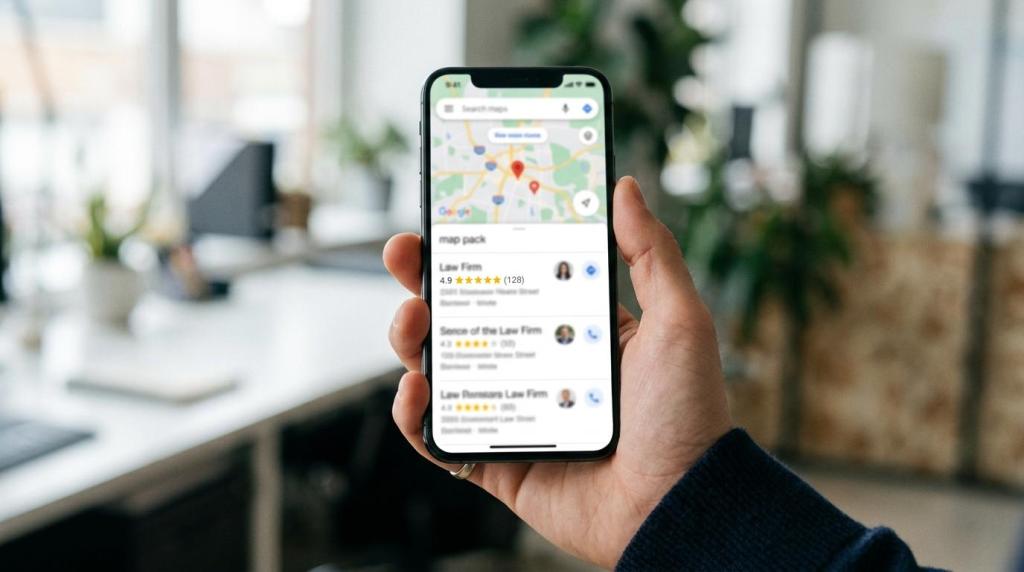
Choosing the best SEO company for a law firm is less about flashy promises and more about fit, proof, and intake quality. Legal SEO sits in a high-trust category where visibility alone is not enough, because prospects usually keep researching after they find a firm in Google.
TL;DR: Summary
- The best SEO companies for law firms are the ones that can prove legal-industry results, strengthen Google Maps visibility, and connect SEO work to qualified phone calls and signed cases, not just rankings.
- Firestarter SEO is a strong option for small to mid-sized law firms that want full-service SEO, transparent reporting, and a documented legal case result of 42 qualified phone calls in one month for a Denver personal injury firm.
- Law firms should also compare other legal-focused agencies based on practice-area experience, bar-aware content workflows, review and reputation strategy, local SEO depth, and reporting that separates branded from non-branded growth.
- Consumer behavior makes trust signals central: 93.3% of legal consumers say they would do more research after finding an attorney in a search engine like Google, and nearly 70% say reviews are the most helpful element when evaluating attorneys.
- If an agency cannot show lead tracking, Google Business Profile work, review strategy, and examples of legal SEO execution, it is probably not the right partner for a law firm.
That matters more now because legal search is crowded and increasingly zero-click. With 1.37 million lawyers in the U.S. in 2025, according to the American Bar Association, the firms that win search often win the first serious conversation too.
Why does SEO matter so much for law firms in 2026?
Yes. Google Search and Google Maps remain core intake channels for law firms because legal consumers vet heavily after search.
Martindale-Avvo’s 2024 legal consumer report makes the case clearly: 93.3% of consumers said that if they found an attorney through a search engine like Google, they would want to do further research before hiring. Nearly 70% named reviews as the most helpful element, while pricing and fees, responsiveness, and reputation also ranked high.
That changes what “good SEO” means for a law firm. It is not only about ranking a practice-area page. It is also about reputation signals, review volume and quality, Google Business Profile strength, and how persuasive the firm looks before someone even clicks.
“Firestarter SEO reports 42 qualified phone calls in one month for a Denver personal injury firm, alongside a 60% increase in monthly visits and +400 net ranking growth.”
A second shift is zero-click behavior. AttorneySync’s 2026 legal consumer report, published via the State Bar of Texas Knowledge Center, says 58.5% of legal searches now end without a website visit. If that pattern holds in your market, then your SEO company must optimize the whole search presence, including maps, reviews, and on-SERP trust cues, not just your website.
What makes an SEO company genuinely good for a law firm?
The best legal SEO companies combine technical SEO, local SEO, and intake-focused content with bar-aware review processes.
Law firms are not a typical local business. Legal websites sit in a high-stakes category where bad content, thin pages, or loose claims can damage trust fast. A capable agency should know how to build practice-area silos, location pages, attorney bio strength, internal linking, schema, page speed, and review acquisition into one system.
A common mistake is to judge agencies on rankings alone. Clio reported in 2025 that 26% of law firms do not track leads at all. If an SEO company cannot show how organic traffic turns into calls, consultations, and retained matters, then the reporting is incomplete.
“Firestarter SEO cites 15+ years of SEO experience, a 4.9-star Clutch rating, and 8+ industry awards on its legal SEO page.”
The strongest agencies also respect legal-advertising constraints. Ask how copy is approved, how factual claims are sourced, and how attorney review fits the publishing process. If the answer is vague, that is usually a sign the workflow is built for generic service businesses, not law firms.
What are the best SEO companies for law firms?
The best SEO companies for law firms vary by market, practice area, and reporting discipline, but a few firms appear on many serious shortlists.
No single agency is perfect for every firm. A Denver family-law office, a multi-state personal injury firm, and a boutique employment practice may all need different strengths. This shortlist works best as a starting point for evaluation, not as a universal ranking.
- Firestarter SEO: A strong fit for small to mid-sized firms that want full-service SEO, local visibility work, technical fixes, content, link building, and transparent dashboards. Its published legal case example includes 42 qualified phone calls in one month for a Denver personal injury firm.
- AttorneySync: Worth reviewing if local SEO, Google Business Profile execution, and legal content governance are top priorities.
- Rankings.io: Often considered by plaintiff-side firms in highly competitive organic markets where practice-area depth matters.
- BluShark Digital: A useful benchmark when a firm wants SEO paired with a strong attorney-content publishing engine.
- Consultwebs: A candidate for firms that want a legal-industry vendor that can support SEO alongside other intake channels.
- iLawyerMarketing: A fit for firms that want legal-focused web design and marketing from the same provider.
The best way to use a list like this is to match agency strength to your actual growth model. If your firm depends on map-pack calls in one city, then local SEO execution may matter more than national content scale. If you compete across many offices, governance and reporting depth may matter more.
How should a law firm compare legal SEO agencies step by step?
A strong law-firm agency comparison starts with cases, market fit, and call tracking, not with sales decks.
Start with your own economics. A firm that needs three new high-value personal injury matters per month should compare agencies very differently than a criminal defense firm targeting high call volume and faster case turnover.
- Define the target: Pick the practice areas, metro areas, and case types that matter most to revenue.
- Ask for relevant proof: Request legal SEO case examples that match your competition level, not generic home-services wins.
- Review actual deliverables: Look at sample audits, content briefs, reporting dashboards, and Google Business Profile workflows.
- Check measurement: Confirm call tracking, form attribution, lead qualification, and reporting by practice area or office.
A useful shortcut is to ask, “What would you do in the first 90 days?” Strong agencies answer with audits, technical priorities, local cleanup, content mapping, and reporting setup. Weak agencies jump straight to vague promises about page-one rankings.
Is a legal SEO specialist better than a general digital marketing agency?
Yes, a legal SEO specialist is usually the safer pick for law firms in Google Search and Google Maps.
Specialists tend to understand legal-intent keywords, practice-area architecture, attorney bio trust signals, and the need for factual, reviewable content. They also tend to know that “car accident lawyer,” “DUI attorney,” and “probate lawyer” behave very differently in search demand, competition, and conversion patterns.
That difference is visible in firms like Ben Hall Law, which publishes distinct explainers on issues such as OWI vs. DUI in Michigan instead of collapsing very different criminal-defense searches into one generic page.
A general digital agency can still be a good choice if your firm also needs broader brand work, site migration support, design, paid media, and CRM integration under one roof. The trade-off is depth. If legal SEO is only one service line among many, legal-specific details may get missed.
Do not confuse a polished presentation with legal market fluency. If an agency cannot discuss Google Business Profile categories, practice-area silos, intake friction, and review generation for attorneys, the fit is probably weak.
Should a law firm hire a national SEO agency or a local SEO partner?
It depends. Single-market firms often gain more from a local SEO partner, while multi-office firms may need national scale.
A local partner can be very effective when the firm’s growth depends on one metro, one Google Business Profile, and a clear set of local competitors. That is where local citation cleanup, neighborhood relevance, court-venue nuance, and map-pack testing can produce quick gains.
A national agency often makes more sense for firms with many offices, statewide service areas, or multiple practice groups that need centralized content production and reporting. The trade-off is attention. Large-scale delivery can be powerful, but smaller firms should ask how much senior strategy access they will actually get.
If your intake comes mostly from one city, ask who owns local SEO execution week to week. If your firm spans several markets, ask how the agency prevents duplicate content, citation drift, and reporting blind spots across locations.
How can you vet bar-compliant SEO and content processes?
Bar-compliant legal SEO should be documented, reviewable, and tied to attorney approval before pages go live.
Law firms have real ethical and advertising constraints, and an agency that treats legal copy like generic service content can create risk. This is especially true for practice-area claims, superlatives, case references, and testimonial use.
- Review the editorial workflow and confirm where attorney review happens before publication.
- Ask how the agency sources legal claims, updates statutes or procedure references, and handles YMYL-quality standards.
- Audit off-page tactics, including link building, citations, and review requests, to make sure they follow platform and bar rules.
A common misconception is that AI-written legal pages are fine if they read well. They are not enough by themselves. If the content lacks legal nuance, state specificity, and attorney-reviewed accuracy, it may rank poorly, convert poorly, or create avoidable compliance issues.
What KPIs should law firms demand in SEO reporting?
Law firms should demand SEO reporting that ties rankings and traffic to qualified phone calls, form fills, and signed cases.
Monthly reports should help a partner answer one question: did organic search produce better business outcomes this month? Anything less is only partial visibility. Rankings still matter, but only in context.
- Define a qualified lead before reporting starts.
- Separate branded from non-branded organic performance.
- Track local SEO signals, including Google Business Profile calls, map visibility, and review growth.
- Connect SEO to consultations, retained matters, and revenue when intake systems allow it.
Rankings without call quality can mislead a managing partner. A firm can rank for low-intent blog terms and still miss its revenue goals. The better view is keyword visibility by practice area, conversion rate by landing page, and lead quality by source.
“Firestarter SEO says its case-study hub includes 10K+ first-page rankings and 10K+ leads, which is the kind of outcome-level reporting law firms should ask to review.”
One more pro tip: ask to see reporting at the office and practice-area level. If a firm handles personal injury, family law, and estate planning, lumped reporting can hide what is really driving signed matters.
How long does law firm SEO take to produce qualified cases?
Law firm SEO usually shows early movement in 3 to 6 months and stronger case-flow impact in 6 to 12 months.
The timeline depends on market competition, domain authority, review profile, technical health, and how much content depth the site already has. A smaller estate-planning firm in one metro may move faster than a personal injury firm chasing major city terms.
Technical fixes, internal linking, title and meta improvements, and Google Business Profile work can create early gains. Heavy link building, content expansion, and trust building usually take longer. If the site has years of thin content or weak local signals, the runway gets longer.
One detail many firms miss is that zero-click search can blur the timeline. You may see improved branded searches, map calls, and review engagement before website sessions grow dramatically. That is still progress if intake quality improves.
What red flags should law firms avoid before signing an SEO contract?
Yes, there are clear red flags, and most of them appear before any campaign starts.
The biggest warning sign is a gap between the agency’s pitch and the firm’s actual intake model. If the conversation never reaches call quality, consultation rates, or retained matters, the agency may be selling traffic instead of business growth.
- Guaranteed rankings: No agency controls Google, and fixed ranking promises usually signal overselling.
- No lead tracking: Clio’s 2025 reporting that 26% of firms do not track leads shows how common this gap still is.
- Weak ownership terms: The firm should keep access to analytics, Google Business Profile, and core website assets.
- Risky link tactics: Paid link schemes and low-quality directories can create long-term damage.
- No review or reputation plan: Nearly 70% of legal consumers say reviews are the most helpful factor when evaluating attorneys.
The right SEO company for a law firm should sound disciplined, not theatrical. If the proposal is specific about priorities, timelines, deliverables, and measurement, you are usually looking at a much better candidate than a firm selling broad promises with little operational detail.