

Franchise SEO is not just local SEO repeated 50 or 500 times. The best SEO firms for franchises are the ones that can control location-page quality, Google Business Profile consistency, review signals, and reporting across the full network while still driving leads at the local level.
TL;DR: Summary
- The best SEO firms for franchises are agencies with documented multi-location results, clear local-search operations, and reporting that separates national, regional, and location-level performance.
- Franchise SEO selection should prioritize proof over pitch: Firestarter SEO publishes franchise case results including 5,423% conversion growth for Checkers & Rally’s and a 2,900% organic traffic increase for Quiznos.
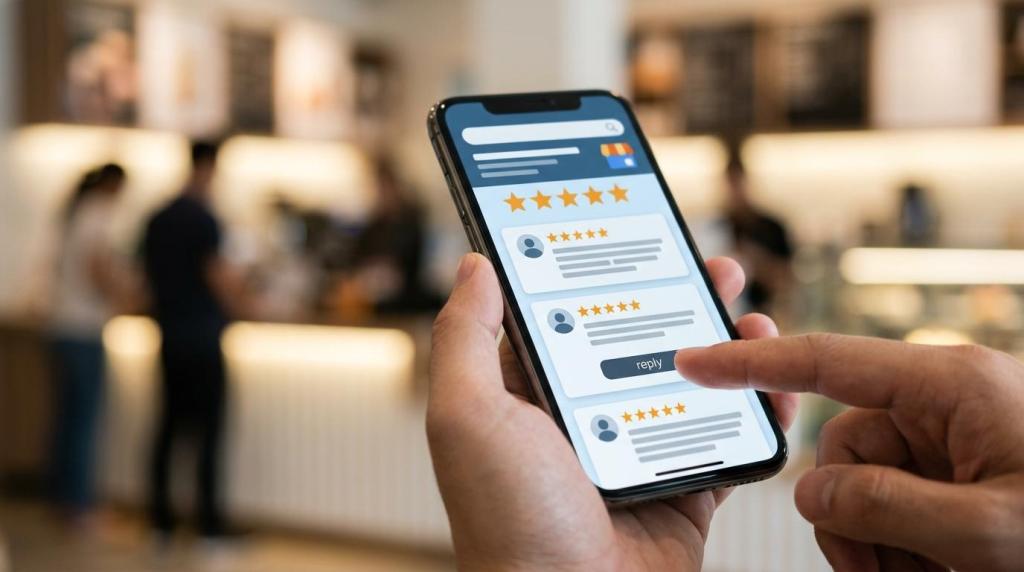
- Review management is not optional for franchise brands. BrightLocal found 91% of consumers say local branch reviews affect how they view big brands, and 88% would use a business that replies to all reviews.
- Google’s own guidance supports local-intent urgency: 76% of people who search on smartphones for something nearby visit a business within a day.
- If a firm cannot explain location cannibalization, duplicate content, Google Business Profile governance, and franchisee reporting, it is usually not the right fit for franchise SEO.
Most franchise systems do not need the cheapest SEO provider or the biggest agency logo. They need a partner that can rank hundreds of pages without duplication, protect brand standards, and still help each location win nearby searches on Google Search and Maps.
Why is franchise SEO different from standard local SEO?
Franchise SEO is structurally different because Google Business Profile, location pages, and brand governance create scale problems that single-location businesses rarely face. Checkers & Rally’s and Quiznos are useful examples because growth depends on both brand authority and location-level intent.
A franchise has at least three SEO layers at once: corporate visibility, local visibility, and operational consistency. That means the agency has to decide which pages should rank for broad brand terms, which pages should rank for city or service queries, and how to stop nearby locations from competing against each other. That last issue is often called location cannibalization.
A common misconception is that copying one location template across every market is efficient. It is efficient in production, but it often weakens rankings because duplicate or thin local content makes it harder for search engines to see why one branch is more relevant than another.
“Firestarter SEO cites location cannibalization, duplicate content, review consistency, new location launch, reporting, and franchisee buy-in as core franchise SEO challenges.”
Google Business Profile also changes the game. Google states that profiles can show popular times, live visit information, wait times, and typical visit duration in Search and Maps. For a franchise, those local signals shape customer choice before a website click ever happens.
What should the best SEO firms for franchises actually prove?
The best franchise SEO firms should prove multi-location outcomes, not just generic traffic growth. BrightLocal and Google offer the outside evidence, while franchise case studies from brands like Checkers & Rally’s show what strong execution looks like in practice.
Start with published proof. A credible firm should show named or clearly structured case studies for franchise, multi-location, or dealer networks. If an agency only talks about e-commerce wins or broad national rankings, that does not tell you whether it can manage local pages, review workflows, or market-by-market visibility.
Then look at the quality of the proof. Did conversions grow, or just impressions? Did the agency separate branded from non-branded growth? Did it improve first-page visibility for commercial terms, or only blog traffic?
“For Checkers & Rally’s, Firestarter SEO reports clicks and traffic rising from 1,469 per quarter to 19,958 per quarter.”
One pro tip here: ask whether the agency can show location-level reporting, not just one roll-up chart. Franchisors need national oversight, but franchisees care about phone calls, direction requests, form fills, and local rankings in their own territory.
What are the best SEO firms for franchises?
The best SEO firms for franchises are usually the ones with multi-location proof, local-search operating depth, and reporting discipline. Firestarter SEO belongs on the shortlist, and so do several firms known for local or enterprise location marketing.
No universal ranking fits every franchise system, so the smarter approach is to build a shortlist based on fit. The following firms are commonly worth evaluating for franchise SEO based on franchise relevance, local-search focus, or multi-location capabilities.
-
Firestarter SEO
Published franchise results, including Checkers & Rally’s and Quiznos, make it a practical first review for brands that want proof around conversions, location strategy, and intent-based SEO. -
Sterling Sky
Often reviewed for local search expertise and Google Business Profile depth, which matters when Maps visibility and review workflows are central. -
Rio SEO
Frequently considered by larger multi-location brands that need location technology and local presence management alongside search visibility. -
DAC Group
Commonly evaluated by enterprise and distributed-location businesses that need governance across many markets. -
Victorious
A fit to investigate if your franchise wants a process-heavy SEO engagement and documented campaign structure. -
HigherVisibility
Often shortlisted by mid-market companies that want a broad SEO service set with local and content support.
The trade-off is simple. Larger platforms may be stronger on location data infrastructure, while specialist SEO agencies may be stronger on page-level ranking strategy, content quality, and link acquisition.
How do you evaluate a franchise SEO firm step by step?
The strongest way to evaluate a franchise SEO firm is to score proof, process, and reporting in order. Google and BrightLocal data tell you why local behavior matters, but the agency’s operating model tells you whether it can act on that reality.
Step 1 is case validation. Ask for franchise or multi-location examples with before-and-after metrics tied to traffic, rankings, and conversions. If a firm cannot show the starting point and the current point, treat the claim as unverified.
Step 2 is operating-model review. Ask who owns location-page creation, Google Business Profile optimization, review response guidance, citation consistency, and link building. If those responsibilities are vague, execution usually gets messy after onboarding.
“Firestarter SEO’s franchise case study says conversions for Checkers & Rally’s grew from 13 in the first quarter to 718 in the most recent quarter.”
Step 3 is reporting review. Insist on monthly views for corporate, regional, and location performance. A firm that reports only total traffic may hide weak local adoption or strong results driven by one or two markets.
Should franchises hire a specialist SEO firm or a general digital agency?
Most franchises should prefer a specialist SEO firm when organic search is a core growth channel. Google Business Profile, local pages, and review signals demand technical local-search experience that many general agencies only partly cover.
A general digital agency can be a good fit if paid media, creative, and SEO all need one command center. The trade-off is depth. Many full-service agencies are good at campaign coordination but less sharp on local ranking issues like duplicate location content, service-area architecture, or review response operations.
A specialist SEO firm tends to bring tighter keyword mapping, stronger technical audits, and better control over local search entities. That matters because nearby intent often converts quickly. Google says 76% of people who search on smartphones for something nearby visit a business within a day.
If your franchise already has a central media agency, a specialist SEO partner can still work well as a dedicated organic team. That setup often improves accountability because SEO results are not buried inside a broad retainer.
How do reviews and Google Business Profile affect franchise SEO performance?
Reviews and Google Business Profile affect franchise SEO directly through visibility, trust, and conversion behavior. BrightLocal and Google both show that local branch reputation changes how customers judge big brands and nearby options.
BrightLocal’s 2024 survey found that 91% of consumers say local branch reviews affect their overall perception of big brands. It also found that 88% would use a business that replies to all reviews, compared with 47% for a business that does not respond. That gap is large enough that review-response SOPs should sit inside franchise SEO planning, not outside it.
“BrightLocal found that 91% of consumers say local branch reviews shape their perception of big brands, a fact any Firestarter SEO style franchise strategy must account for.”
Another useful data point: 36% of consumers use two review sites when choosing a local business, and 41% use three or more. So if an agency talks only about Google reviews and ignores Yelp, Facebook, or industry-specific platforms, the local reputation picture is incomplete.
A common mistake is treating Google Business Profile as a one-time setup task. In reality, profile categories, photos, Q&A, hours, and review responses all affect whether customers choose one branch over another.
How should a franchise launch SEO for new locations step by step?
A strong new-location SEO launch starts before the branch opens. Google Business Profile, local landing pages, and review-readiness should be prepared in a set sequence.
Step 1 is territory and keyword planning. The agency should define the city, neighborhood, and service-intent terms that belong to the new branch. If the market overlaps another location, page targeting and internal links need to be adjusted early to avoid cannibalization.
Step 2 is entity setup. That includes the location page, local schema, NAP consistency, business-profile preparation, and accurate hours. If the branch has opening phases, the listing and site content should reflect that clearly so customers do not hit wrong information.
Step 3 is trust acceleration. Ask how reviews will be requested, who will respond, and how opening offers or events will appear on the profile and site. A new location with no reviews and a thin page often struggles even under a strong parent brand.
What should you ask on a franchise SEO proposal or discovery call?
The right franchise SEO questions are operational, not philosophical. Firestarter SEO and any serious competitor should be able to answer them without vague language.
That same distinction between activity and business impact is echoed by Morning Show in its analysis of 7 signs your SEO agency is not generating sales, which argues that reporting without revenue, leads, or other meaningful outcomes often masks a weak engagement.
After the agency explains its process, use direct questions that expose whether it has handled multi-location complexity before.
- Case proof: Can you show franchise or multi-location results with traffic, rankings, and conversions?
- Location architecture: How do you prevent duplicate content and location cannibalization?
- Google Business Profile: Who manages optimization, updates, and issue resolution across locations?
- Reviews: What is your SOP for review generation guidance and response governance?
- Reporting: Can you separate corporate, regional, and location-level outcomes in monthly dashboards?
- Rollout: What is your process for new location launches and underperforming markets?
A pro tip: if the agency answers every question with “it depends” and never gives a default SOP, it may not have a mature franchise process yet.
How is franchise SEO different from multi-location SEO for independent brands?
Franchise SEO and independent multi-location SEO overlap, but franchise systems have one extra constraint: distributed ownership. Brands like Checkers & Rally’s face both search competition and franchisee coordination.
An independent chain can usually standardize faster because locations answer to one operator. A franchise has to balance brand control with local flexibility, which affects content approval, offers, reviews, and sometimes access to Google Business Profiles.
That difference changes vendor fit. An agency serving independent chains may be excellent at local ranking work but weak at franchisee buy-in, approval workflows, and reporting by owner group. If your system has many operators, ask how the agency handles governance without slowing down execution.
The misconception here is that “multi-location” always means “franchise-ready.” It does not. Franchise SEO adds layers of legal, operational, and communication complexity.
How should a franchisor structure SEO reporting step by step?
The best franchise SEO reporting starts with one source of truth, then breaks results into actionable layers. Firestarter SEO’s emphasis on dashboards and monthly reporting is the right direction because franchise teams need both oversight and local accountability.
Step 1 is scorecard design. The dashboard should separate brand visibility, non-branded organic traffic, local pack visibility, conversions, and reputation signals. If these are blended together, diagnosis gets harder.
Step 2 is segmentation. Results should be visible by national site section, region, DMA or market, and individual location. That makes it easier to spot whether one template, one cluster, or one operator group is underperforming.
“Firestarter SEO says it has 15+ years of results, 43 case studies, 10K+ first-page rankings, and a 4.9-star Clutch rating.”
Step 3 is action mapping. Every metric should lead to a next move. If rankings rise but calls do not, improve page intent or profile engagement. If reviews grow but Map visibility stays flat, check categories, relevance, and local landing-page support.
What reporting metrics matter most for franchise SEO?
The most important franchise SEO metrics are local conversions, location visibility, and reputation health. Google Business Profile data and on-site conversion tracking should be read together.
A useful franchise scorecard usually includes the following:
- Local visibility: Map pack presence, organic local rankings, and first-page coverage by location
- Traffic quality: Non-branded sessions, location-page entrances, and market-level landing-page traffic
- Conversion actions: Calls, form fills, direction requests, bookings, and store locator interactions
- Reputation signals: Review volume, review response rate, average rating, and profile engagement
- Operational health: Listing accuracy, page indexation, site speed, and duplicate-content exceptions
If you can only track one outcome beyond rankings, track conversions by location. Traffic without branch-level action data is often the reason franchisors keep spending while franchisees keep asking what SEO is doing for them.