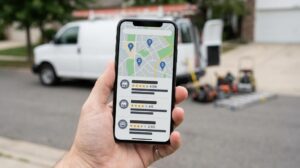


Local SEO is the process of optimizing your online presence so your business appears in search results when people nearby search for what you offer. When someone in Denver types “dentist near me” or “best HVAC company in Denver,” the businesses that show up at the top of Google Maps and the organic results underneath did not get there by accident. They got there through a specific, repeatable set of actions that this guide covers in full.
For most small businesses, local search is where the highest-intent customers live. Someone searching “emergency plumber Denver” is not browsing. They have a problem, and they want to hire someone today. Getting in front of that search, at that moment, is worth more than almost any other marketing channel you can invest in.
This guide covers every component of a working local SEO strategy for 2026: how local search works, what Google actually uses to rank local businesses, how to build and optimize your Google Business Profile, how to get your citations right, how to earn local backlinks, and how to track whether your efforts are working. Each section links to a deeper-dive article in this series for readers who want to go further on a specific topic.
What Is Local SEO and Why Does It Matter for Small Businesses?
Local SEO is search engine optimization focused specifically on geographic relevance. While traditional SEO helps you rank nationally or globally, local SEO determines whether your business shows up when someone in your city or neighborhood is searching for your type of product or service.
The stakes are significant. According to Google, 46% of all searches have local intent. That means nearly half of everything people search for on Google is connected to finding something nearby. And BrightLocal’s research consistently shows that over 70% of consumers who perform a local search visit a business within five miles. These are not casual browsers. They are buyers.
The businesses that win local search are not always the biggest or the oldest. They are the ones that have done the foundational work: a complete and optimized Google Business Profile, consistent business information across the web, a website with locally relevant content, and a steady stream of genuine customer reviews. None of that requires a massive budget. It requires consistency and knowing what to prioritize.
For a broader understanding of how SEO works as a whole — including the technical, content, and authority components that underpin local rankings — see our complete guide: How Search Engine Optimization Actually Works — And Why Most Businesses Get It Wrong. Local SEO sits within that larger framework, and understanding the full picture makes the local-specific work easier to execute.
How Google Decides Which Local Businesses to Show
Google uses three primary factors to determine local rankings. Understanding these three factors tells you exactly where to focus your energy.
Relevance
Relevance measures how well your business matches what the searcher is looking for. A Denver auto repair shop optimized around “Denver auto repair” and “car service Denver” is more relevant to someone searching those terms than a general mechanic shop with no location-specific signals. Relevance is influenced by your Google Business Profile categories, your website content, and how consistently Google sees your business associated with specific services and locations.
Distance
Distance measures how far your business is from the searcher or from the location specified in the query. If someone searches “coffee shop near me” from Capitol Hill in Denver, Google will prioritize businesses within walking or driving distance of that location. Distance is a signal you cannot directly control, but it means local businesses naturally have an advantage over competitors elsewhere in the city for searches from their immediate area.
Prominence
Prominence measures how well-known and trusted your business is. Google evaluates this based on the volume and quality of your reviews, the authority of the websites that link to you, how often your business is mentioned across the web, and how complete and active your Google Business Profile is. Prominence is the factor you have the most control over and the one that separates businesses at similar relevance and distance levels.
Google also factors in behavioral signals: click-through rates from search results, the percentage of people who request directions to your location, calls made directly from your listing, and how long visitors stay on your website after clicking through. These signals tell Google whether your listing is actually delivering value to searchers.
| Ranking Signal | What It Means for Your Business |
| Google Business Profile completeness | Every field filled in — categories, hours, services, description, photos — signals a legitimate, active business |
| NAP consistency | Your Name, Address, and Phone number must match exactly across your website, GBP, and every directory listing |
| Review volume and recency | Fresh reviews from real customers signal ongoing activity and build trust with both Google and searchers |
| Local citations | Consistent mentions of your business across directories, industry listings, and local sites reinforce your location and legitimacy |
| On-page local signals | Location-specific keywords, city/neighborhood mentions, and locally relevant content on your website pages |
| Proximity | How close your business is to the searcher — a signal you cannot change, but context that shapes which other signals matter more |
| Backlinks with local relevance | Links from Denver-area news sites, chambers of commerce, local directories, and industry associations carry extra weight for local rankings |
Read More: How to Rank in the Google Map Pack: The Step-by-Step Process.
Google Business Profile: The Foundation of Local SEO
Your Google Business Profile (GBP) is the single most important asset in your local SEO strategy. It is the listing that appears in Google Maps and the local pack — the block of three business results that shows up above organic results for local searches. If your GBP is incomplete, unverified, or poorly optimized, nothing else you do in local SEO will reach its potential.
Claim and Verify Your Profile
If you have not already claimed your business on Google Business Profile, do that first. Go to business.google.com, search for your business, and follow the verification process. Google typically verifies by mailing a postcard with a code to your business address. Once verified, you have full control over your listing.
If your business has been operating for a while, there may already be an unverified listing created by Google or by a customer. Claim it rather than creating a new one. Duplicate listings create confusion for Google and can suppress your rankings.
Fill Every Field Completely
An incomplete GBP is a disadvantage in rankings. Google uses the information in your profile to evaluate relevance, and gaps in that information reduce your competitive position. Every field matters.
- Business name: Use your exact legal business name. Do not add keywords to it. “Denver Plumbing Experts,” when your legal name is “Johnson Plumbing LLC,” violates Google’s guidelines and can result in suspension.
- Primary and secondary categories: Your primary category is the single most important relevance signal in your entire GBP. Choose the most specific category that accurately describes your main service. Add secondary categories for additional services you offer.
- Business description: Write 250 to 750 words describing what your business does, who it serves, and what makes it different. Include your city and primary service keywords naturally. This is not a space for keyword stuffing but for genuinely communicating your value.
- Services and products: List every service you offer with descriptions. This creates additional keyword relevance for searches related to specific services, not just your business name.
- Hours of operation: Keep these accurate and update them for holidays. Searchers and Google both rely on this. Inaccurate hours generate negative reviews and erode trust.
- Phone number and website: These must match exactly what appears on your website and across all your directory listings. Inconsistencies here weaken your NAP signals.
- Photos: Businesses with photos receive significantly more clicks and requests for directions than those without. Add at minimum: your exterior (so people can find you), interior, team photos, and examples of your work or products. Update photos regularly.
Read more: How to Fully Optimize Your Google Business Profile in 2026.
Reviews: The Local Ranking Signal Most Businesses Underinvest In
Reviews are one of the most powerful local ranking signals Google uses, and they are also the signal most businesses are most passive about. Waiting for reviews to arrive organically consistently produces too few reviews, too slowly.
The businesses that dominate local search in competitive Denver markets, like home services, healthcare, legal, and restaurants, typically have significantly more reviews than their competitors, and those reviews are recent. A business with 200 reviews, mostly collected two years ago, is weaker than a competitor with 80 reviews collected steadily over the past 12 months.
Building reviews systematically means making the ask a standard part of your customer experience. After a job is complete, after a patient visit, after a transaction closes — that is when to ask. A direct link to your GBP review page makes it frictionless. A follow-up text or email with the link sent within 24 hours of service converts at significantly higher rates than a general request.
Respond to every review, positive and negative. Responses to reviews signal to Google that your business is active and engaged. Responses to negative reviews signal to potential customers that you take service seriously.
NAP Consistency: Why Your Business Information Has to Match Everywhere
NAP stands for Name, Address, and Phone number. Google cross-references your business information across hundreds of sources — your website, your GBP, Yelp, the Better Business Bureau, local chambers of commerce, industry directories, and dozens of other platforms — to verify that you are a legitimate, stable business at a real location.
When that information is inconsistent, Google’s confidence in your listing drops. “Firestarter SEO” listed as “Firestarter S.E.O.” on one directory and “Firestarter SEO LLC” on another creates ambiguity. An old suite number that appears in legacy directory listings but not on your current website casts doubt on which address is accurate. These inconsistencies do not trigger a penalty, but they weaken the positive signal that consistent NAP information sends.
The fix is an audit. Export every listing you can find that mentions your business, compare the information against your current GBP, and correct anything that does not match exactly. Pay particular attention to your website footer, your Google Business Profile, Yelp, Facebook, Apple Maps, Bing Places, and any industry-specific directories relevant to your sector.
NAP Consistency: Why Your Name, Address, and Phone Number Matter to Google.
Local Citations: Building the Web of Trust Google Uses to Verify Your Business
A local citation is any mention of your business name, address, and phone number on another website. Citations serve as third-party verification that your business exists at the location you claim, offers the services you describe, and has been operating long enough to accumulate a presence across the web.
Two categories of citations matter most for local rankings.
General Directories
These are the major platforms that list businesses across all industries: Google Business Profile, Yelp, Apple Maps, Bing Places, Facebook, the Better Business Bureau, and Foursquare. Every local business should have a complete, consistent, verified listing on all of these. They carry the most weight because they are the most trusted and most widely crawled.
Industry-Specific and Local Directories
These are directories specific to your industry or your geographic area. A Denver law firm should be listed on Avvo, Justia, and the Colorado Bar Association directory. A Denver restaurant should be on OpenTable, Zomato, and the Denver Restaurant Association. A home services contractor should be on HomeAdvisor, Angi, and the Denver Metro Chamber of Commerce.
The specificity of these citations carries extra weight because it provides Google with contextual signals about both what your business does and where it operates. A citation from the Denver Metro Chamber of Commerce tells Google you are a legitimate Denver business. A citation from a professional association directory signals to Google that you operate in a specific industry.
Citation building is a systematic process of finding the directories that matter for your business type and location, creating or claiming your listing, and ensuring the information is complete and accurate. It is not glamorous work, but businesses that have done it thoroughly consistently outrank competitors who have not in local search.
Read more: What Local Citations Are and Why Inconsistent Ones Destroy Your Rankings
On-Page Local SEO: Optimizing Your Website for Geographic Relevance
Your website is the second pillar of local search optimization alongside your GBP. Google reads your website to understand what your business does, where it operates, and whether it is a credible source of information for local searchers. Several on-page elements directly influence local rankings.
Location Pages
If your business serves a specific city or region, you need at least one dedicated location page on your website. For a Denver-based business, this means a page specifically about your Denver services: what you offer in Denver, which neighborhoods or suburbs you serve, how to reach you, and, ideally, some Denver-specific content that demonstrates local knowledge and relevance.
Businesses that serve multiple locations — say, Denver, Aurora, and Lakewood — need a separate, substantive page for each location. A single page listing all three cities is significantly weaker than three individual pages, each built with genuine content for that specific market.
Local SEO for Multi-Location Businesses: How to Rank in Multiple Cities Without Penalties.
Schema Markup
Schema markup is structured data code added to your website that helps Google understand specific information about your business. LocalBusiness schema tells Google your exact name, address, phone number, hours, and service area in a format it can read unambiguously. Adding this markup to your website eliminates any confusion Google might have about your business details and reinforces your NAP signals.
This is a technical implementation that typically requires a developer or an SEO professional. It is not required to rank locally, but businesses in competitive local markets benefit from the additional clarity it provides.
Firestarter SEO’s technical SEO service includes schema markup implementation in every local engagement.
Locally Relevant Content
Publishing content that addresses questions and topics specific to your local market builds relevance signals that go beyond basic location pages. A Denver HVAC company that publishes content about preparing your home for Colorado winters, common heating issues in Denver’s high-altitude climate, or what to know about Denver building permits for HVAC installations is building relevance for Denver-specific searches that a generic HVAC company website cannot match.
This does not require publishing content every week. A handful of locally relevant, well-researched articles published over the course of the year compounds over time into a meaningful local authority signal.
Local Link Building: Earning Authority in Your Geographic Market
Backlinks from other websites remain one of the most powerful ranking signals in both national and local SEO. For local search specifically, links from geographically relevant sources carry additional weight because they signal to Google that your business is recognized and referenced by credible local sources.
Local link building looks different from national link building. The goal is not to accumulate links from the highest-authority websites on the internet. The goal is to earn links from sources trusted within your geographic market and industry.
- Local news coverage. Denver Business Journal, Westword, Denverite, and neighborhood news outlets regularly cover local business stories, openings, community involvement, and expert commentary. A single link from one of these sources carries significant local authority.
- Chamber of commerce and business association memberships. Denver Metro Chamber of Commerce, local neighborhood business associations, and industry trade organizations typically include member directory listings with links. These are among the easiest local links to earn and among the most trusted.
- Sponsorships and community involvement. Sponsoring local events, sports teams, or nonprofit initiatives typically earns a link from the organization’s website. These links are editorially placed, locally relevant, and directly signal community presence.
- Partnerships with complementary businesses. A Denver interior designer who partners with a Denver furniture store or contractor can earn mutual links through shared content, referral pages, or genuine business collaborations.
- Local resource pages. Many Denver neighborhood associations, community organizations, and local government sites maintain resource pages listing relevant local businesses. Getting listed on these pages earns both a citation and a link.
Firestarter SEO’s link building service includes a local link strategy component specifically for businesses focused on geographic rankings. Every link we pursue for local clients goes through a relevance filter that prioritizes the sources Google trusts most in your market.
How to Track Whether Your Local SEO Is Actually Working
Local SEO without measurement is guesswork. The metrics that matter for local search are distinct from those that matter for national SEO. Here is what to track and where to find it.
Google Business Profile Insights
Your GBP dashboard provides data on how people are finding and interacting with your listing: how many times your profile appeared in search, how many people clicked for directions, how many called directly from the listing, and how many visited your website from GBP. These metrics tell you whether your local listing is generating real business activity, not just impressions.
Track these monthly. A growing number of direction requests and calls directly from your GBP is a strong signal that your local visibility is translating into real-world traffic.
Google Search Console
Google Search Console shows you which search queries are driving people to your website, including local queries. Filter by queries that include your city name, neighborhood names, or “near me” variants. This tells you whether your website is gaining visibility for locally relevant searches beyond just branded searches for your business name.
Map Pack Position Tracking
Standard keyword tracking tools typically show national or city-level rankings. For local businesses, what matters is whether you appear in the Map Pack for your target searches and whether that position is improving. Tools like BrightLocal and Whitespark track local pack positions at a granular geographic level and give you a clearer picture of your local competitive position than general rank trackers do.
Review Velocity
Track the number of new reviews you receive each month and your average rating over time. If review velocity slows down, that is a signal to re-activate your review request process. If your rating is declining, that is a signal about the customer experience that needs addressing before it becomes a rankings problem.
How Firestarter SEO Approaches Local Search for Denver Businesses
Firestarter SEO is a Denver-based agency with 15+ years of experience helping small and mid-size businesses rank in local search. The Denver market is competitive across nearly every service category — home services, healthcare, legal, financial, and hospitality are all crowded with businesses competing for the same local searches. The businesses that consistently win in those searches are not outspending their competitors. They are out-executing them on the fundamentals.
Every local SEO engagement we run starts with an audit of the four areas that most consistently determine local ranking outcomes: GBP completeness and optimization, NAP consistency across directories, on-page local signals on the client’s website, and the strength and geographic relevance of the client’s backlink profile. The audit tells us where the gaps are. The strategy tells us the order in which to close them.
That process is part of why a local service client came to us with virtually no organic presence and went on to reach 40 organic leads per month within six months. And why a Denver med spa client saw a 173% increase in leads after we rebuilt their local content strategy and corrected the citation inconsistencies that had been suppressing their Map Pack visibility.
Firestarter holds a 4.8-star Google rating and a 4.9-star rating on Clutch, and we are ranked the number-two Denver SEO agency on Clutch. Those ratings reflect the same work this guide describes, applied consistently across local markets where the fundamentals determine who wins.
Our local SEO services include full GBP optimization, citation building and cleanup, location page development, local link building, and monthly reporting tied directly to local ranking and lead outcomes.
The Most Common Local SEO Mistakes Small Businesses Make
Most local SEO failures come from the same handful of mistakes. Knowing them in advance is the easiest way to avoid them.
- Ignoring the GBP after setup. Claiming your profile and never returning to it is one of the most common mistakes. GBP rewards active profiles. Post updates, respond to reviews, add new photos, and keep your hours up to date. An inactive profile loses ground to competitors who are actively managing theirs.
- Using inconsistent business information. Every variation of your business name, address, or phone number across the web creates a signal conflict that weakens your local rankings. Audit your listings and standardize every entry before building new citations.
- Choosing the wrong primary GBP category. Your primary category is the single most influential relevance signal in your profile. “General Contractor,” when you primarily do kitchen renovations, is weaker than “Kitchen Remodeler.” Be specific.
- Not asking for reviews. Passive review collection is slow. Your competitors who actively ask for reviews at the right moment in the customer journey will consistently outpace you in review volume and recency, both of which Google weights heavily.
- Building one generic location page and stopping. A single location page that lists every city you serve is weaker than dedicated pages for each market. If you serve Denver, Aurora, and Boulder, create a substantive page for each.
- Skipping local link building entirely. Many local businesses invest in GBP optimization and citations, but never build local backlinks. In competitive markets, businesses with locally relevant authority links consistently outrank those without.
Frequently Asked Questions About Local SEO
What is local SEO and how is it different from regular SEO?
Local SEO is the process of optimizing your online presence to appear in search results for geographically-specific queries — searches that include a city name, neighborhood, or “near me” modifier, or that Google interprets as having local intent. Regular SEO focuses on ranking for broader, non-location-specific searches. The main difference in practice is the role of Google Business Profile and local citations, which are specific to local search and have no equivalent in national SEO. Both share the same technical and content foundations.
How long does local SEO take to show results?
Timelines vary by market competitiveness and starting point. For businesses in less-competitive local markets, GBP optimization and citation cleanup can yield visible Map Pack improvements within four to eight weeks. For competitive Denver markets like home services, healthcare, or legal, meaningful local ranking improvements typically take three to six months of consistent work, with compounding results over twelve months. The foundational work — GBP optimization, NAP cleanup, and citation building — produces the fastest early results.
Do I need a website to rank in local search?
You can appear in the Google Map Pack without a website, but your overall local ranking potential is significantly limited without one. Google uses your website to verify your business information, evaluate the relevance of your content, and assess the authority signals that determine prominence. Businesses with well-optimized websites consistently outrank those without one in competitive local markets. If budget is a constraint, even a simple, well-structured website with a strong location page is significantly better than no website at all.
What is the Google Map Pack and how do I get into it?
The Google Map Pack is the block of three local business listings that appears near the top of search results for local queries, typically displayed with a map. It is the most visible real estate in local search and drives a disproportionate share of clicks and leads for local businesses. Getting into the Map Pack requires a verified, optimized Google Business Profile, consistent NAP information across the web, genuine customer reviews, and sufficient local authority signals from citations and backlinks. There is no single shortcut — Map Pack rankings are the cumulative result of getting the foundational elements right.
Read more: How to Rank in the Google Map Pack: The Step-by-Step Process.
How important are online reviews for local SEO?
Reviews are one of the most significant local ranking signals Google uses, and they also directly influence whether searchers choose your business over a competitor at the same ranking position. Volume, recency, and rating all matter. A business with 15 reviews has less ranking power than a competitor with 80 reviews in the same category, all else being equal. More importantly, a business with 80 reviews collected over the past 12 months consistently outranks one with 200 reviews that are 2 to 3 years old. Google interprets recent reviews as evidence of an active, legitimate business.
Can I do local SEO myself, or do I need an agency?
Many of the foundational local SEO actions are genuinely DIY-friendly: claiming and completing your GBP, standardizing your NAP information, submitting to major directories, and asking customers for reviews. Where professional help typically produces significantly better results in competitive markets, where the gap between your listing and the top Map Pack results is not just about setup but about sustained authority-building through local link acquisition, location page optimization, and ongoing GBP management. If your market is not highly competitive and you have time to invest, DIY local SEO can move the needle. In competitive markets, the time and expertise required to do it well typically justify professional help.
Ready to Build Visibility in Your Local Market?
Local search is where the highest-intent customers in your city find the businesses they hire. The businesses that show up consistently at the top of those results got there through the same foundational work this guide covers: a complete and optimized Google Business Profile, consistent business information across the web, locally relevant content, genuine reviews, and earned authority from credible local sources.
None of it requires a massive budget. It requires knowing what to prioritize and executing consistently over time. Firestarter SEO has been doing exactly that for Denver-area businesses for over 15 years.
Want to know exactly where your local search presence stands right now? Request a free local SEO audit and get a clear picture of what’s holding your Map Pack rankings back — and what it would take to fix it. Or contact our team directly to talk through a local SEO strategy for your specific market.