

The importance of link building cannot be overstated. A core component of effective link building revolves around the proper distribution of anchor text. Anchor text plays a key role in SEO by providing both users and search engines with important information about the content on the link’s destination. This article will discuss what anchor text is, how it impacts SEO, and best practices for optimizing anchor text with proper distributions.
What is Anchor Text?
Anchor text is the visible, clickable link we often see as we scroll through blogs, news articles, or other websites. Usually, the link we click has good indicators as to the information provided at the site it links to. If links are the highway of the internet, anchor text serves as the road signs. There are a variety of types of anchor text, and the most common fall into these categories:
- Branded – This anchor text includes the name of the brand. For example – Firestarter SEO
- Keyword Branded – This combines a keyword with the brand name. For example, Firestarter SEO, a Denver-based SEO company
- Exact Match – These anchors only utilize the target keyword, such as
Monthly SEO Packages - Phrase – This type of anchor text uses a descriptive phrase, often containing a keyword. For example, a nationally renowned SEO company.
- Random – This anchor text is untargeted, with minimal indicators, such as this well-designed website
- URL / Naked Link – These contain no anchor text at all and simply display the URL itself, such as the Firestarter SEO website.
How Does Anchor Text Impact SEO?
In SEO, there are a seemingly endless number of factors to consider. One such factor is anchor text. Anchor text impacts SEO by providing signals to search engines about what a linked page is about.
As search engines have evolved, they now use anchor text patterns to determine whether a website is engaging in manipulative or spammy link building practices. One of the strongest indicators of a healthy link profile is anchor text distribution.
For example, if 90% of a website’s inbound links use exact match anchor text, that imbalance can serve as a red flag to search engines that the site is attempting to game rankings rather than earn them naturally.
Anchor Text Optimization
So how is anchor text optimized?
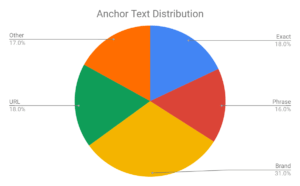
From an SEO perspective, the goal is balance. A natural-looking link profile includes a mix of branded, keyword-modified, phrase-based, and neutral anchors. Too much exact match anchor text—especially when repeated consistently—can be damaging.
In a case study conducted by Moz, they found that large national brands tend to have anchor text profiles dominated by branded anchors, with keyword-focused anchors making up a much smaller percentage of total links.
The best starting point for any website is to audit its current anchor text distribution. There are a number of tools available at no cost that can help surface this data. Once you understand how your anchors are currently distributed, you can develop a link building strategy that fills in the gaps and reduces risk.
The ultimate goal is to create a natural, trustworthy link profile that supports rankings long term and avoids triggering algorithmic red flags.